The Complete Guide to Dental Billing: Insurance Claims, Coding, and Payment Processing
Learn dental billing best practices. Reduce claim denials, improve collections, and maximize insurance reimbursements. Step-by-step guide for dental practices.
Oswego Medical Billing Solutions
4 min read
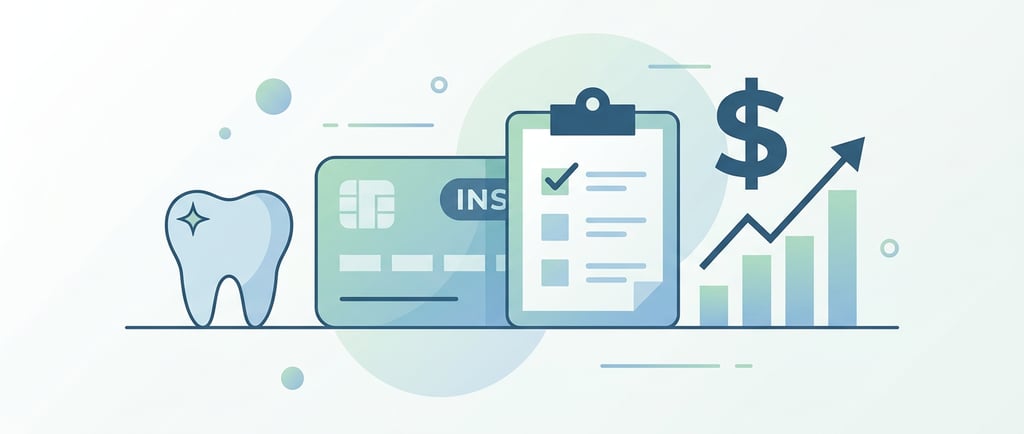
Dental billing is complex, but it doesn't have to cost you thousands in lost revenue. Learn how to maximize insurance reimbursements, reduce claim denials, and get paid faster. This guide serves dental practices across Portland, Lake Oswego, Beaverton, Tigard, Hillsboro, Gresham, and throughout Oregon.
Dental practices struggle with billing more than most medical offices. Dental insurance coding is different from medical coding, claim submission rules vary by carrier, and payment processing is slower and more error-prone. Many dental practices lose 20-30% of their potential revenue to billing mistakes, denied claims, and inefficient follow-up.
This guide walks you through the entire dental billing process, from patient insurance verification through final payment posting, so you understand exactly where your practice stands and what needs to change.
Why Dental Billing Is Different From Medical Billing
Dental insurance operates under completely different rules than medical insurance. Dental insurance has annual maximums (typically $1,000–$1,500), uses CDT codes instead of CPT codes, requires more pre-authorizations, and has higher patient cost-sharing. Because dental insurance is fragmented across hundreds of carriers with different rules, claims get denied for reasons that wouldn't affect medical claims.
For dental practices in Portland, Lake Oswego, and across Oregon, these differences create unique billing challenges that require specialty-specific expertise.
Common Dental Billing Mistakes Costing You Money
Missing Pre-Authorizations
Many practices submit major procedure claims without pre-authorization. Insurance denies the claim, the practice has already done the work, and the patient is stuck with the bill. This single mistake costs dental practices thousands annually.
Incorrect CDT Coding
Dental codes are specific. Using the wrong code gets denied. Using outdated codes that insurance companies no longer recognize causes delays and rejections.
Missing Documentation
Insurance companies deny claims that don't include radiographs, treatment plans, or clinical notes. If the claim doesn't prove medical necessity, insurers won't pay.
Not Verifying Benefits Before Treatment
Many practices don't verify coverage, deductibles, and annual maximums before treatment. Patient has $800 remaining; practice treats for $2,000; insurance pays $800; patient is shocked and angry.
Poor Follow-Up on Denied Claims
A denied claim sits for 60 days while the practice moves on. By then, it's stale and the claim gets written off. Proper follow-up recovers 40–60% of initially denied claims. This is where denial management becomes critical. Read our guide on how to prevent revenue loss from insurance claim denials for strategies to recover denied claims and improve your collections.
Coordination of Benefits Errors
When a patient has dual coverage, you must file with the primary first. File with the secondary first, and both claims get denied.
Step-by-Step: The Dental Billing Process That Maximizes Collections
Step 1: Pre-Treatment – Verify Insurance Benefits
Before any treatment, verify the patient's insurance is active, deductible status, annual maximum remaining, which procedures require pre-authorization, and cost-share percentage. This 5-minute step prevents 90% of billing headaches.
Step 2: Obtain Pre-Authorization for Major Procedures
For any procedure over $500, submit a pre-authorization request with treatment plan, radiographs, and clinical notes. Pre-authorization protects you and the patient before treatment.
Step 3: Collect Patient Cost-Share at Treatment
Collect the patient's estimated cost-share at the time of treatment. Don't wait for insurance to pay first. This eliminates billing follow-up and bad debt.
Step 4: Submit Claim with Complete Documentation
Submit within 7 days of treatment. Include radiographs, treatment plan, clinical notes, and all required supporting documentation with correct CDT codes. Incomplete claims get denied; complete claims get paid faster.
Step 5: Track and Follow Up on Denied Claims
Contact the insurance company within 7 days of denial. Ask specifically why the claim was denied. Correct the error and resubmit. If the denial is incorrect, appeal.
Step 6: Post Payments and Track A/R
Post insurance payments within 24 hours. Track which claims are paid, which are pending (over 30 days), which are denied (need follow-up), and patient balances.
Aging A/R is one of the biggest signs that your billing process needs attention. Learn more about how to reduce aging accounts receivable without hiring more staff to keep your collections on track.
Most Common Dental Claim Denial Reasons
Missing Pre-Authorization – Verify coverage and submit auth requests before treatment.
Incorrect CDT Code – Use current CDT codes; verify codes match treatment provided.
Missing Documentation – Always include radiographs and clinical notes with claims.
Patient Over Annual Max – Verify remaining benefits before treatment; inform patient upfront.
Coordination of Benefits Issue – File with primary first; verify dual coverage before treatment.
Procedure Not Covered – Verify coverage before treatment; discuss with patient upfront.
Claim Submitted Late – Submit within 7 days of treatment.
Most denied claims can be recovered with proper follow-up.
In-House vs. Outsourced Dental Billing
In-House Costs
Staff labor ($35,000–$60,000+ annually), software ($150–$500/month), training ($1,000–$3,000 annually), system maintenance ($500–$1,500/month), plus error costs from denied claims and slow collections.
Total annual cost: $50,000–$80,000+. And you're still losing 15–25% of claims to denials and slow follow-up.
Outsourced Dental Billing
Professional dental billing services handle all claim submissions, follow-up, denial management, patient collections, insurance verification, and monthly reporting.
Cost is typically 5–8% of collections. Many practices actually save money because they recover denied claims the in-house team would have written off. Many practices discover that outsourcing medical billing saves money compared to in-house operations when you factor in labor, software, errors, and lost revenue from denied claims.
Red Flags Your Dental Billing Needs Help
Claims taking 45+ days to pay (should be 15–30)
25%+ of claims denied (should be under 5%)
A/R growing (claims getting older, not younger)
Staff spending 20+ hours/week on billing
Writing off significant bad debt annually
Don't know exactly how much each procedure should reimburse
Patient collections inconsistent or slow
If 3+ of these apply, your practice is leaving money on the table.
Get Your Dental Billing Audit
Don't guess about your billing performance. Get a professional dental billing audit that analyzes your claim denial patterns, coding accuracy, collections efficiency, and the cost of in-house billing vs. outsourcing.
Request Your Free Dental Billing Audit & Cost Analysis →
No obligation. No credit card. Just honest data showing where your practice can improve and save money.
Serving Dental Practices Across Oregon
Whether you're a dental practice in Portland, Lake Oswego, Beaverton, Tigard, Hillsboro, Gresham, Clackamas, or anywhere across Oregon, our dental billing services help practices like yours reduce claim denials, improve collections, and get paid faster.
We specialize in dental billing for practices of all sizes, from solo practitioners to multi-location dental groups. Our expertise in dental insurance, CDT coding, and denial recovery helps Oregon dental practices maximize revenue and focus on what matters most: patient care.
8405 SW BARBUR BLVD, SUITE B
PORTLAND, OR 97219
Phone: (503) 345-4987
Fax: (503) 345-4998
QUICK MENU
CONTACT
Oswego Medical Billing Solutions. All rights reserved.