HIPAA Compliance in Medical Billing: What Every Healthcare Provider Should Know
Learn how Oregon healthcare providers can stay HIPAA‑compliant in medical billing, protect patient data, and reduce compliance risks statewide.
Oswego Medical Billing Solutions
2/11/20263 min read
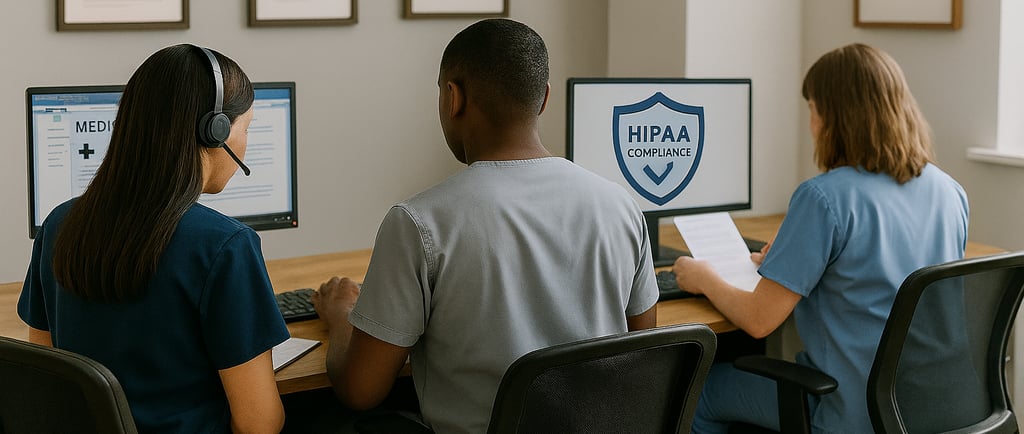
Staying compliant with HIPAA isn’t optional—it's essential. For medical providers across Oregon and the Pacific Northwest, protecting patient health information (PHI) is not only a legal requirement but a cornerstone of patient trust. As billing regulations evolve and cybersecurity threats increase, more practices are turning to professional billing partners who understand the full scope of HIPAA compliance.
At Oswego Medical Billing Solutions, we help healthcare organizations ensure that every step of the billing process—from patient intake to claim submission—is secure, accurate, and fully compliant with federal standards. Below is what every provider should know about maintaining HIPAA compliance throughout the medical billing workflow.
What Is HIPAA Compliance in Medical Billing?
The Health Insurance Portability and Accountability Act (HIPAA) establish strict rules governing how PHI is collected, transmitted, stored, and used. In medical billing, HIPAA compliance ensures that sensitive patient data remains confidential and protected from unauthorized access.
Key components of HIPAA that affect billing include:
1. The Privacy Rule
Defines what PHI is and regulates who can access it. Any billing team—internal or outsourced—must ensure PHI is only used for treatment, payment, or authorized operations.
2. The Security Rule
Requires administrative, physical, and technical safeguards to protect electronic PHI (ePHI). This includes secure software, encrypted communication, password protection, audit logs, and access controls.
3. The Breach Notification Rule
Requires prompt reporting of any PHI breach to affected patients and, depending on severity, federal authorities.
Common Compliance Risks in Medical Billing
Even well‑intentioned practices can unintentionally violate HIPAA during everyday billing tasks. Some of the most common risks include:
Sending PHI over unencrypted email
Mishandling patient documents or statements
Lack of employee training and outdated compliance policies
Improper access management within EHR or billing systems
Failure to securely store or dispose of billing documentation
Working with billing vendors who lack HIPAA safeguards
One mistake can result in costly fines, legal exposure, and loss of patient trust.
Even compliant billing systems can lead to errors if workflows are inconsistent.
👉 Learn more: Why Medical Claims Get Denied | Reduce Denials & Improve Billing | Oregon & U.S. Clinics | OSWEGO MEDICAL BILLING SOLUTIONS
Why Outsourcing Billing Can Strengthen HIPAA Compliance
Many providers assume that keeping billing in‑house gives them more control—but in reality, most small and mid‑sized practices lack the staffing, technology, and training required for full HIPAA compliance.
A trusted billing partner like Oswego Medical Billing Solutions brings:
1. Compliance‑Trained Billing Experts
Our billing professionals undergo continuous compliance training to stay updated on regulatory changes and best practices.
2. Secure, Encrypted Billing Systems
We use HIPAA‑compliant software, multi‑layer security protocols, and strict data access controls to protect all electronic PHI.
3. Audit‑Ready Documentation
Accurate logs, permissions tracking, claim processing history, and documented workflows help protect your practice during audits.
4. Reduced Internal Risk
With billing handled externally, your staff has fewer opportunities to mistakenly mishandle records or expose PHI.
5. Business Associate Agreement (BAA)
We provide a legally binding BAA that outlines responsibilities, security commitments, and PHI safeguards—giving you peace of mind.
How Oswego Medical Billing Solutions Protects Your Practice
As a local Oregon billing partner, we understand the compliance needs of providers across Portland, Lake Oswego, Beaverton, Hillsboro, Gresham, Clackamas, Salem, and Vancouver (WA). Our HIPAA‑focused processes include:
Encrypted data transmission & secure communication channels
User‑level access controls and identity verification
Routine internal audits and risk assessments
Compliance‑driven workflows for coding, claims, and documentation
Secure storage and protected backups of billing data
Ongoing training for every staff member handling PHI
Your PHI security is our top priority—because compliance failures are expensive, but doing things right doesn’t have to be.
Best Practices for Providers to Stay HIPAA Compliant
Even if you outsource billing, your practice plays an important role in HIPAA compliance. Follow these essential best practices:
Train staff regularly on PHI protection
Limit chart and system access to necessary personnel
Use secure email or patient portals for communication
Keep billing records locked or password‑protected
Immediately report any suspicious activity
Maintain updated policies and employee acknowledgments
Your billing partner should extend your compliance—never compromise it.
Final Thoughts: Compliance Is a Shared Responsibility
HIPAA violations often occur not from malicious intent but from outdated systems, rushed staff, or overlooked procedures. By partnering with Oswego Medical Billing Solutions, providers gain a billing team that prioritizes compliance as much as accuracy and efficiency.
Billing accuracy and compliance together play a critical role in preventing revenue loss.
👉 Read more: Is Your Practice Losing Thousands in Hidden Revenue? | OSWEGO MEDICAL BILLING SOLUTIONS
Ready to Strengthen Your Billing Compliance?
If you’re ready to enhance security, reduce risk, and improve the financial health of your practice, we’re here to help.
📞Contact Oswego Medical Billing Solutions today to schedule a consultation and learn how we can safeguard your PHI while improving your revenue cycle.
📞 (503) 345-4987 🌐 www.oswegombs.com
8405 SW BARBUR BLVD, SUITE B
PORTLAND, OR 97219
Phone: (503) 345-4987
Fax: (503) 345-4998
QUICK MENU
CONTACT
Oswego Medical Billing Solutions. All rights reserved.